
Maximise your Adventure: Complete Budget Breakdown of 52 Days Backpacking in Peru
Wondering how much it costs to backpack Peru? I spent 52 days traveling on a modest budget and tracked every expense. This post covers daily costs, flights, meals, hostels, and tours, plus tips for saving money, how Peru’s economy impacts prices, and practical budget tips to help you save money while still enjoying Peru.
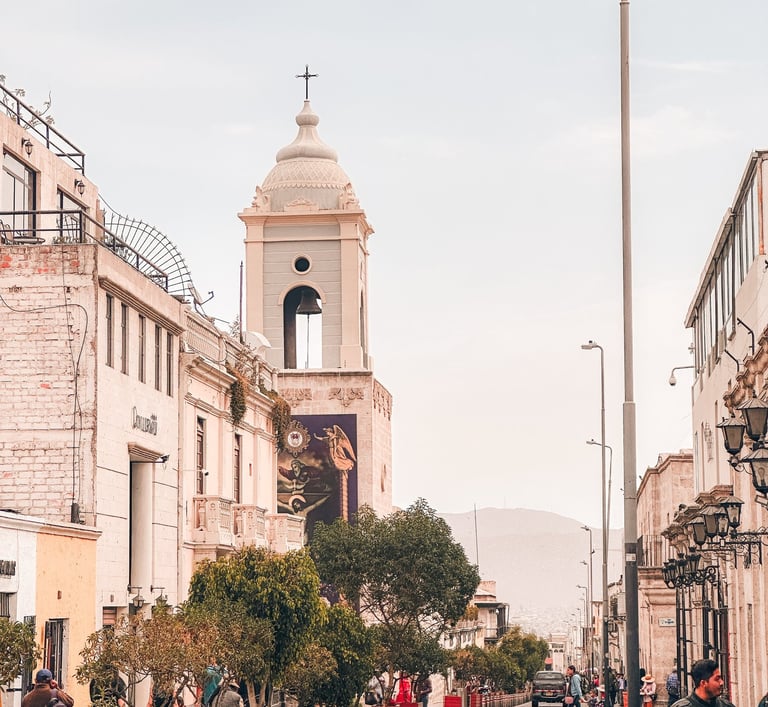
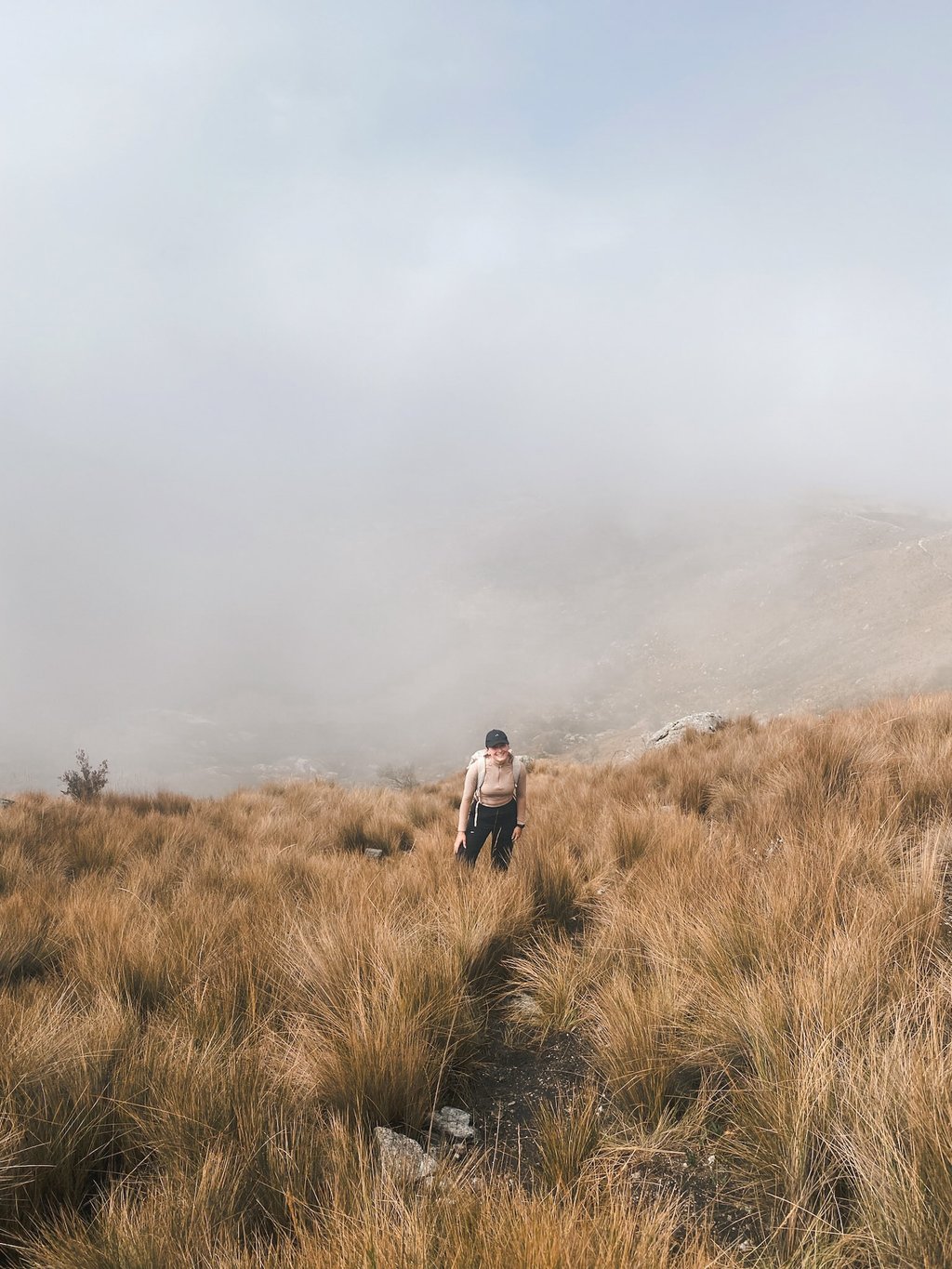
Peru became a steady part of my South American travels. I first visited in October 2023 and returned a few months later in January 2024 because I wanted more time in the mountains around Huaraz. The country offered a mix of coast, desert, and high altitude landscapes without needing to travel far. Moving around was simple, food was consistently good, and people were warm in a way that felt natural rather than performative. I tracked every cost in Tripcoin, and this overview reflects exactly what I spent and how those expenses took shape over 52 days.
Table of Contents
Click on the topic of interest for faster navigation:
Season, Weather and What to Expect
Peru’s climate changes sharply between regions, so the experience depends on where you go and when.
Andes (Cusco, Huaraz, Arequipa)
Dry season: roughly April to October, with clearer skies, colder nights, and the most stable conditions for trekking (Peru Travel, 2025).
Rainy season: November to March, when rain is frequent, trails become muddy, and visibility changes throughout the day (Peru Travel, 2025).
Coast (Lima, Paracas, Mancora)
Dry season: May to November, marked by overcast skies, cooler temperatures, and the coastal fog known as garua, especially around Lima (Peru Travel, 2025).
Rainy season: In December to April occurs heavy rain, especially in the higher areas (Peru Travel, 2025).
Desert (Ica, Huacachina, Nazca)
The southern coast and desert regions are consistently dry throughout the year:
Dry season: effectively year round, with almost no rainfall (Planet Escape, 2025).
Amazon (Iquitos, Puerto Maldonado, Manu)
Dry season: roughly April to October, with lower rainfall, more sunlight, and better conditions for wildlife viewing and river transport (Peru Travel, 2025).
Rainy season: November to March, when heavy showers are common, rivers rise, and some trails become less accessible (Peru Travel, 2025).
High, Shoulder, and Low Season
High season = best weather, highest crowds, highest prices.
Shoulder season = balanced conditions, moderate crowds, mild prices.
Low season = fewer tourists, lower prices, but less ideal weather.
High Season
June to August: Lonely Planet states that June to August is the best time for Andean and Amazonian adventures, noting crystal clear weather, dry trekking conditions, major festivals, and a surge in visitors to Cusco, the Sacred Valley, and major trekking routes (Lonely Planet, 2025).
Shoulder Season
March to May: Lonely Planet calls this the best time for budget travelers, describing it as a lower cost period where:
Coastal summer crowds have left
Andes and Amazon are not yet in high season
Accommodation and tours are still below peak prices
September to November: Lonely Planet explicitly calls September to November "shoulder season everywhere", especially in the Andes, where clear days still linger and trekking routes become quieter. It’s also the best time for surfing without crowds, and a transitional period where the garua fog along the coast begins to lift (Lonely Planet, 2025).
Low Season
December to February (for the Andes): This is when the rainy season is at its height, the Inca Trail closes in February, and roads and trails can be affected by weather. However, it is high season on the coast because it aligns with Peru’s summer and beach tourism (Lonely Planet, 2025)
Did you know that I have made a itinerary series for Peru? Follow the link below and get an overview of four different itineraries and which one would be the one for you:
How Much Does 52 Days in Peru Cost
Here’s the breakdown of what I spent during my trip in Peru (per person, in USD). All expenses are listed in USD. DKK amounts were converted using a historical average rate of 1 DKK = 0.145 USD from 2023 to early 2024
Total (52 days): $1,998
Average per day: $38
Our daily average budget was set to $44 per person, which then made Peru very affordable. But the daily average from there didn’t include three other expenses, as I find them time sensitive and personal:
International flights: $386
Shopping: $208
Gifts: $23
This means that the average daily cost for me was actually $50, making it go over the daily average budget.
What This Budget Really Shows
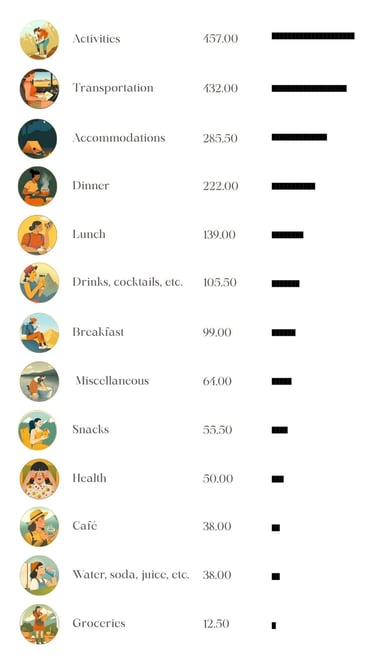
My budget reflects a modest backpacker style of travel: hostels, street food, local buses, and paid activities mixed with free ones. It also shows that while Colombia can look cheap on paper, it adds up quickly once flights and basic comfort are factored in.
Compared to other South American countries I visited, Peru was where I felt that I got more value for money.
Activities: Peru offers a long list of activities, from day hikes and archaeological sites to tours and multi day treks. We prioritized doing many of them and saved money in other areas to balance it out. Even the Salkantay Trek, which is marketed as budget friendly, was still a larger expense when looking at the daily average. Activities were the category we consciously chose to spend on because it felt worthwhile.
Transport: Long distance buses were reliable and fairly priced. They cover most of the country, and it was easy to book through RedBus, which generally matched or came close to bus station prices. The buses were comfortable, especially for overnight routes.
Accommodations: Peru consistently offered good value in private hostel rooms. Most places were clean, roomy, and located close to the center of town. Breakfast was often included, and overall comfort was better than I expected in this price range.
Food: As Peru’s food culture plays a strong role in daily life, it was in my opinion also reflected in the variety and pricing. You could get very tasty food for a small price no matter where you went. My favorite was the 'Menu del dia' (set breakfast or lunch) which cost around 2.50 to 5 USD.
If you want the full budget breakdown from my whole South American trip, I have just the post for you:
Economy and Notable Changes Since My Trip
It adds value to know how Peru's economy has been moving, especially since travel cost is tied to inflation, exchange rates, etc. Here are some updates and trends (from late 2023 and early 2024 until December 2025) that could affect travellers’ budgets:
Since late 2023, Peru has seen moderate inflation and relatively stable currency movement, with prices rising slowly but steadily across daily expenses (Xe, 2025). Economic growth dipped in 2023 but began recovering as tourism and domestic spending increased through 2024 (Lloyds Bank, 2025). Adjustments to wages and rising operational costs have also contributed to small increases in accommodation and service based activities (Ongresso, 2024).
What this means for travellers: Travellers should expect slightly higher prices than what I paid, especially for food in major cities, tours requiring guides, and accommodation in popular destinations. Transport remains stable and continues to be one of the most budget friendly parts of traveling in Peru. Overall, Peru remains affordable, but building a small financial buffer is practical if you plan to trek, move frequently, or visit during peak tourist periods.
Realistic estimate for Backpacking Peru
If you want a realistic estimate, and you are traveling in high season and have the above mentioned factors in mind, I would suggest:
Without flights: $40-46 per day
Including flights: $52–60 per day
These numbers assumes modest choices, not luxury, but not the cheapest possible either and always private rooms.
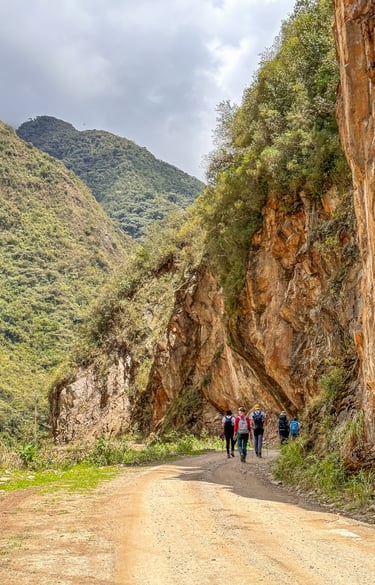
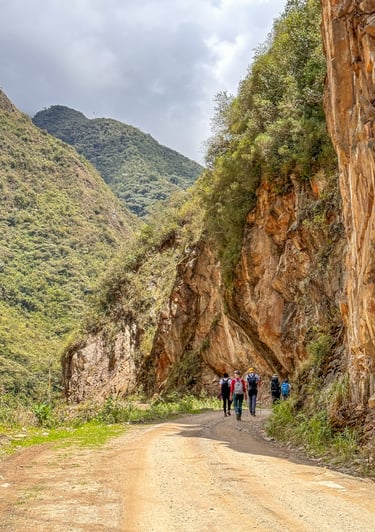
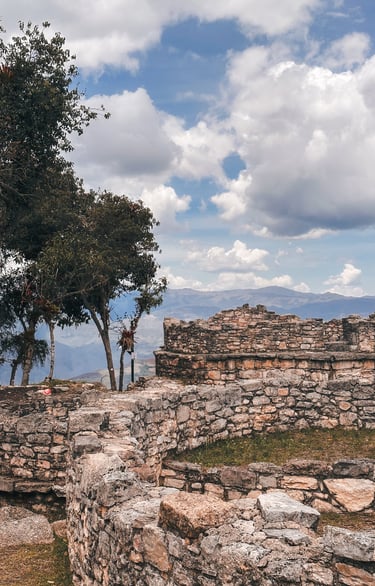
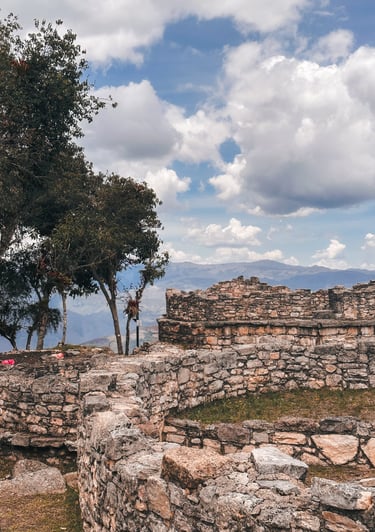
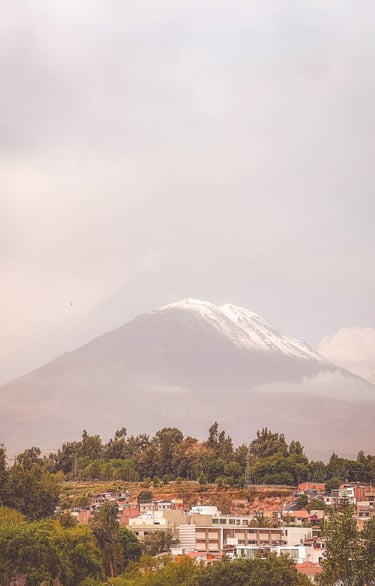
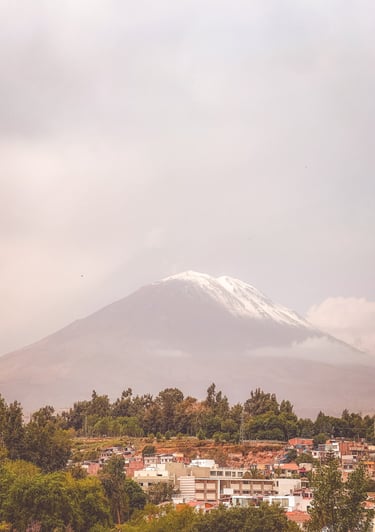
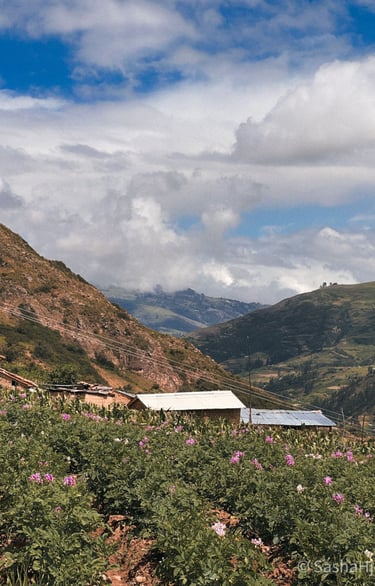
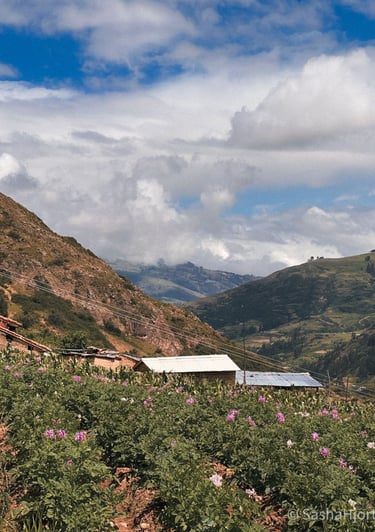
Kuelap Ruins
Salkantay Trek
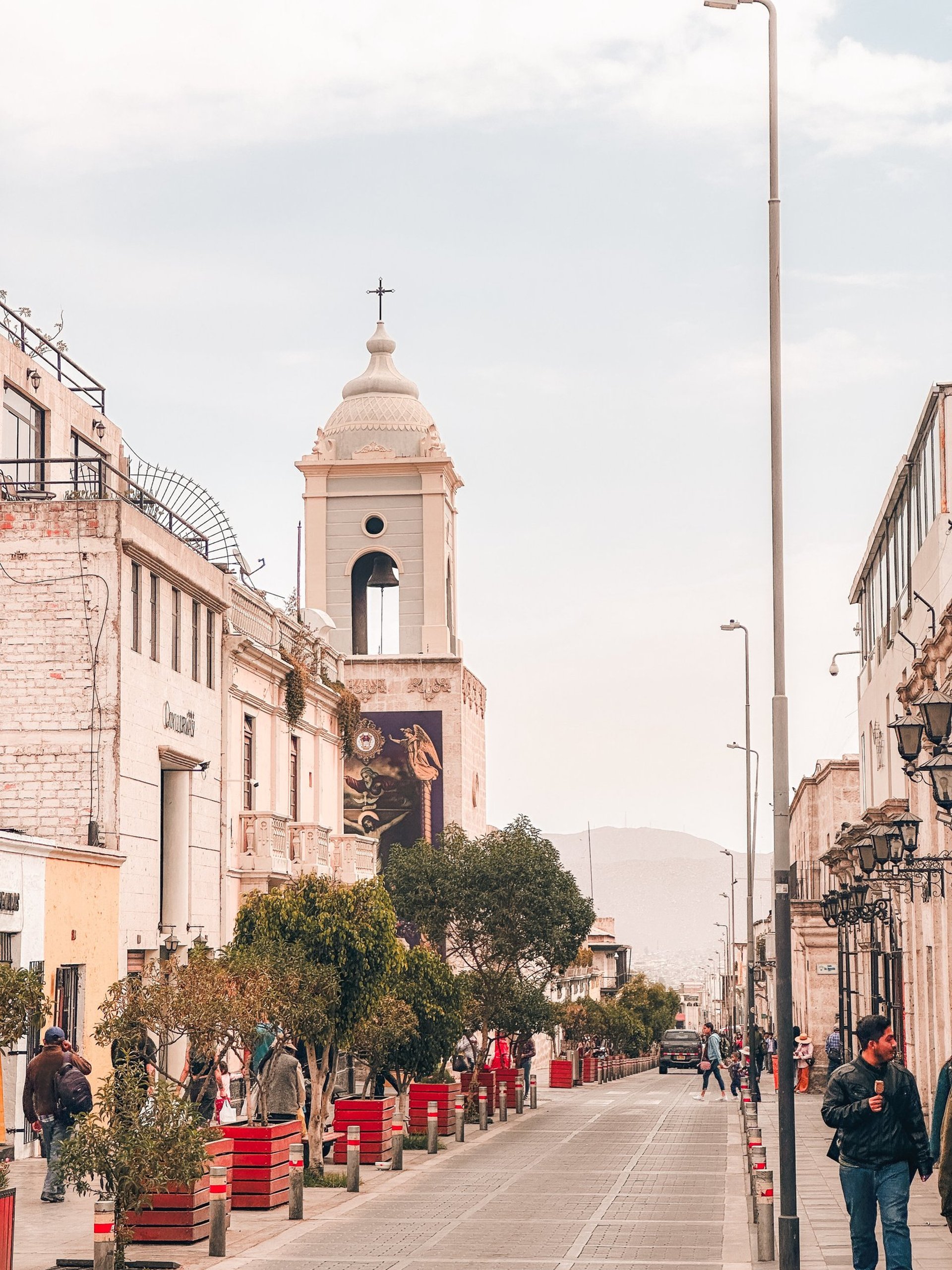
Arequipa
Wilcacocha
Budget Tips and Lessons
Track Your Spending Daily
I used the Tripcoin app (not sponsored) to track my spending. Without it, I would have underestimated how much small expenses like snacks and coffees added up.
Mix Big Adventures with Chill Days
This tip is not only about Peru, but in general when traveling in South America. You don’t need a tour every day. Some of my best memories came from free hikes or exploring local markets, while some of my worst experiences were from overpriced tours (like the Uyuni Salt Flat Tour, which you can read about here: Is the Uyuni Salt Flat Tour Worth It?).
Choose Treks Based on Season and Budget
Some hikes are best done in the dry months, while others are manageable year round. Guided treks and park fees can add up, so choosing the right trek for the season and for your budget makes a noticeable difference.
Stay in Private Hostel Rooms
Private hostel rooms often cost only slightly more than dorms but include more comfort and sometimes breakfast. They were my sweet spot between budget and comfort throughout South America.
Use Night Buses
I booked most of my tickets through RedBus, which usually matched the station prices or was slightly higher. Long distance buses in Peru were comfortable and made overnight travel a practical option. They help stretch the budget without feeling like a compromise.
Cook When You Can
Buying fresh products at local markets and cooking a few meals per week saved some money - if your hostel has a kitchen of course. Plus, markets were cultural experiences in themselves.
Eat Like The Locals
Eating what locals eat opens up more variety and keeps costs manageable. Markets, small lunch spots, and 'menu del dia' offer hearty meals that are both affordable and an easy way to try regional food.
Cabin-Sized Backpack
I avoided checked luggage throughout South America by traveling with a carry-on sized backpack. This saved both money and time at airports, and would recommend more travel by air than land in Colombia. If you want to see my full packing list for South America, in my 40L backpack and with only 10 kg, read more here: The ultimate packing list for women backpacking South America.
Watch Out for Bank Fees
Colombia was the country where I paid the most in exchange rates and ATM fees. Plan ahead by bringing a card with no foreign transaction fees just to save some money, like I did.
Final Thoughts
Peru offers a wide range of landscapes and ways of traveling, all within relatively short distances. What stood out most was the simplicity of moving around, the beautiful landscapes, the amazing food, and the steady warmth of the people. Even with small price increases in recent years, Peru remains accessible when you plan around local food, practical transport, and intentional activity choices.
Related Posts
© 2025. All rights reserved.